
Gratitude Series
All the things Josephians are grateful for
St. Joseph’s Institution’s transformation over the past 175 years highlights how dynamic Singapore’s educational and social landscape has been. In the 19th century, it was a free school to give impoverished children access to basic education. During the Japanese Occupation, it served as a Red Cross Hospital for military casualties. Now, SJI has evolved into a distinctive dual-track secondary school, offering both the four-year SEC Programme and the six-year Integrated Programme, alongside a co-educational pre-university pathway through the International Baccalaureate Diploma Programme (IBDP).
SJI has always embraced an expanding range of missions and functions. This was once again evident when the school welcomed its pre-university students with the introduction of the IBDP for Years 5 and 6, necessitating further evolution of the campus to meet the needs of its growing student body. As Mr Philip Lee Pang Kee, former member of the SJI Board of Governors and an architect by profession who served on the team advising on the campus redevelopment between 2012 and 2016, aptly remarked, the campus needed to be “designed [for] learning and interaction”.
One of the notable renovations in 2017 was the construction of two new blocks for its International Baccalaureate students. According to Mr. Ang Tok Teng, member of the SJI Campus Improvement Committee under the Board of Governors, these new blocks were referred to as the “flying block” by the lead architects of the renovations as the new classrooms stretched across existing buildings in order to make the most of scarce land space. He reflected on the design considerations, noting the “complexity of balancing people's needs, functionality and aesthetics”. The leading intention of these improvements was to encourage a more dynamic learning environment – mobile tables and chairs for ease of discussion, flexible wall partitions to adapt to various classroom sizing needs. However, something unintended yet equally enduring came from this: a space for informal interaction.
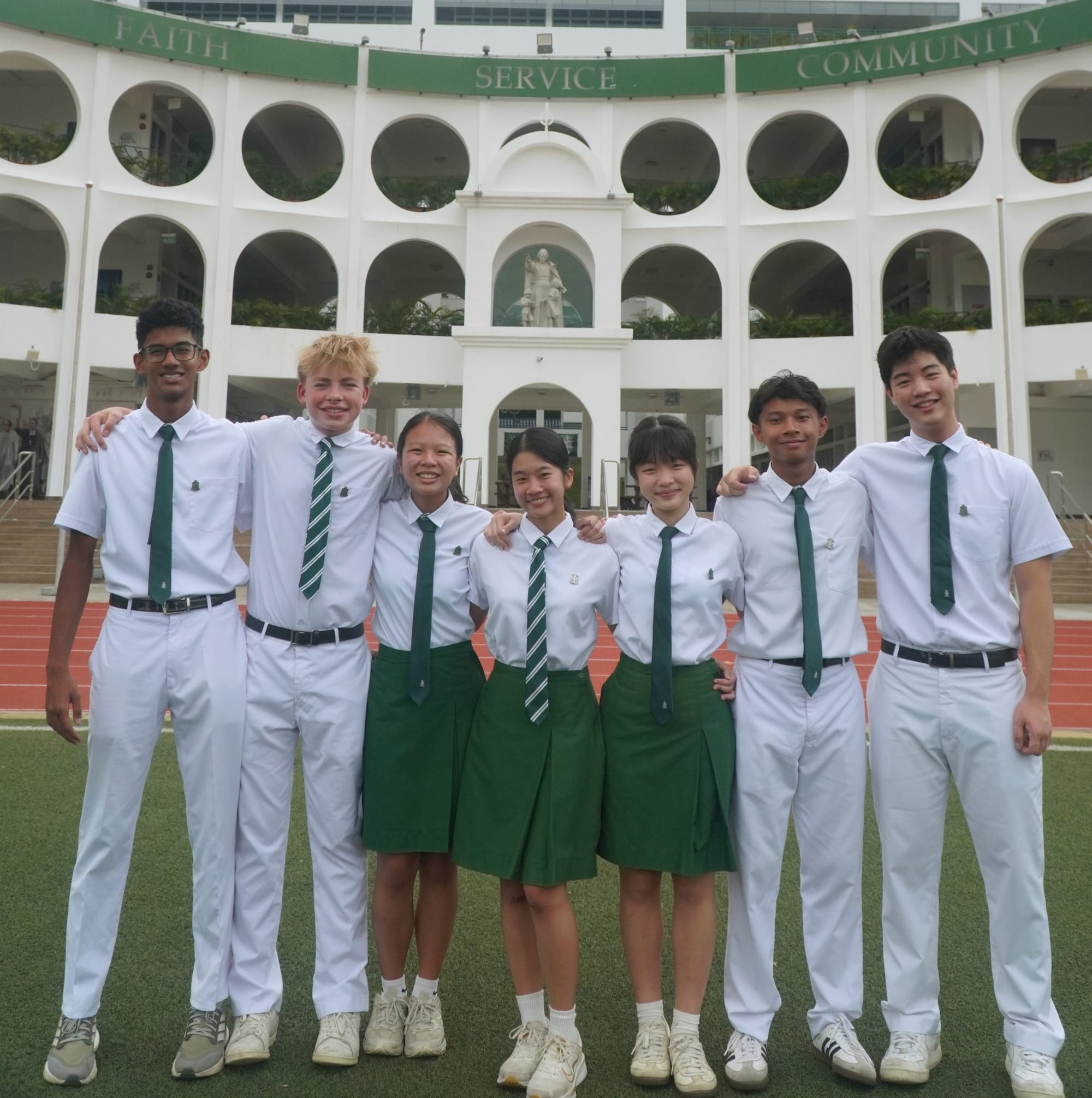
Beyond providing spaces to study and unwind, the lounges have become places where friendships are nurtured and a sense of community takes shape. As one Year 6 student shared, it is increasingly common to see peers gathering there between lessons – a welcome sight that speaks to the value of having spaces where students can simply come together.
This was only one component of the expansive improvements revealed in 2017, and yet it has made a notable difference in the everyday experiences of students. It becomes increasingly clear that these changes, then, are more than bricks and mortar. They are the constituents of the school which actively create a sense of belonging, which transform the school away from a place of instruction and into a space for growth.
As such, we see how such improvements shape daily life for students. SJI, Mr. Philip Lee believes, is a place where work and play should be balanced, such that “the school,” he said, “becomes our second home”.